

My Secrets to Becoming a Bestselling Author
by Nicola Cornick
I wrote from earliest childhood so writing was a
pastime for me before it became my work.
In the early days I had no thought of being published. I enjoyed reading historical fiction and so I thought I would try to write some myself. That was about as far as my plan went!
When I was about eighteen years old, I wrote my first full historical romance and sent it off to Mills & Boon in the UK. They turned it down and the manuscript went on the back burner for a few years whilst I worked in university administration.
Eventually I picked it up again and re-submitted it. By this time the idea that I might become a published author had taken root in my mind and then determination took over: I was on a mission to get my book accepted.
I revised it for a third time and it was accepted for publication. Twelve years after I finished the first draft, I was a published author.
I Love the Rich, Imaginary World You Can Create as a Historical Author
History has always been my passion, reading about it, studying it, writing it. It feels inevitable that when I chose a genre to write in, it would be historical fiction.
I love the rich imaginary world you can create as a historical author, a world that combines authentic historical fact, timeless emotion and vivid description. For the first fifteen years of my writing career I focused on discovering the more unusual historical characters and stories through my research and then bringing them to fictional life.
However, I’d always wanted to write dual-time books where one narrative is set in the past and an interwoven one in the present. Other authors warned me not to do it because they said it is incredibly difficult (they were right!) but for me the idea of examining a historical mystery in the past and the present was irresistible.
My first dual time book came out five years ago and since then I’ve written three more and it is definitely my niche.
My Secrets to Becoming a Bestselling Author
Firstly, I have always tried to write the very best book I can. Your book is your product and you need to be happy with the quality of it.
You can’t expect people to pay good money for something that isn’t the best it can be.
I do a lot of marketing and promotion, and this is also very valuable, but without a good product to sell there’s no point to it. So my first marketing tactic would be that one basic thing – have a great product.
I’ve built up a big network of people I know within the industry, other authors, booksellers, librarians, reviewers, and I am genuinely grateful to everyone who has helped and supported me in my writing. I always try to thank people for their support and to reciprocate where I can.
One of the best things I ever did was to join the Romantic Novelists’ Association and the Historical Writers’ Association. These groups of like-minded and supportive people are incredibly helpful in providing advice on writing craft, sharing good practice and giving marketing support.
When your book comes out you have a ready-made street team who will spread the word about your book on social media, invite you to share events and promote you via their blogs, newsletters and reader groups. Tip two therefore is to become a proactive part of a big and supportive writing organization.
I proactively seek out opportunities to get my name and my books better known and when they are offered, I take them. Sometimes this can be a bit daunting but it has always been worth it, from traveling to Sharjah for the Literary Festival to chairing a panel at London Book and Film Week.
This also comes back to point two; it’s important to get out and meet readers in person and on social media, and to interact with them.
For me there has been no substitute for speaking directly to readers when it comes to selling books. I have identified an area of expertise, in my case, talking about the real history behind my books, and I offer talks and events that fit this theme.
At each event I take copies of my books and offer them to attendees at a special price. It’s a slow build but worth it; discoverability is one of the most difficult things an author has to contend with, so getting out there in person, connecting with readers, has been the single most significant way I have grown my readership.
I do have a newsletter, too. I’ve found that readers like to interact and it’s another way to build those personal relationships. Also, it’s a great way to spread the word about other authors’ books, about historical events that my readers may be interested in and to add some value to what I offer. I can’t fulfill everyone’s reading and entertainment needs but I can put people in touch with others.
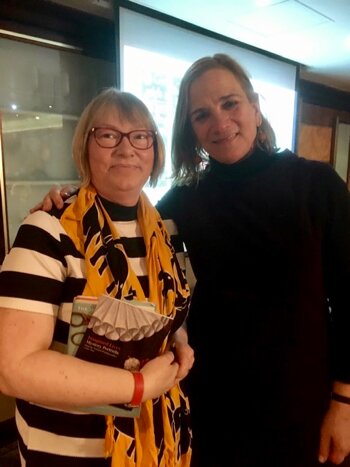
Nicola interviewing Tracy Chevalier.
Why I Stopped Writing a Personal Blog
I belong to a group blog called the Word Wenches www.wordwenches.com which is one of the longest running group blogs on the internet.
When I started out, I did write a personal blog but found that I was spending a lot of time writing the blog pieces and that they were not attracting sufficient response to justify it.
With a group blog we have eight authors providing articles on a variety of topics so we share the load, which is much more manageable. We also promote each others’ work and bring our different readerships to the blog.
3 Mistakes I Made in My Writing Career
I’ve made a number of mistakes along the way; I think we all do and it can be how you learn.
In terms of writing style, I was far too wordy in my first book, using three adjectives where one would do. I also over-used exclamation marks. Now I always try to write sparely and add words if needed when I revise.
In career terms, I think it’s important to get a good agent and get the right agent. I’ve always been fortunate to have an excellent working relationship with all my editors but an agent is another person who can be a sounding board, who is on your side, and whose advice is invaluable. I haven’t always had the right agent at the right time.
I’ve also made mistakes about branding. It’s important that readers and booksellers can identify what it is you write and where to place it in the shops. It took me a while to find the right branding for my books, to make it clear and get that message across.
The genre I write in is called timeslip in the UK, but in the US, a lot of readers had never heard that word. I also combine lots of different elements in my books: History, crime, a contemporary thread, romance, the supernatural, mystery… It was a challenge to find a phrase that encapsulated all of these.
Flowing from this, it was also a problem to choose covers that conveyed what the stories were about. In the end we decided to keep the word “timeslip” for the branding but emphasize the historical nature of the books.
However, the covers used in the different markets are completely different, based on what the publisher feels appeals to the different readerships. In the US they are far more overtly historical than in the UK. This has been a fascinating lesson for me in how to define and promote your product and we are still refining it.
How I Manage to Write a Book A Year
I aim to write a book a year, which is a lot of work when you have to research a particular historical background and topic as well as write the actual book.
I approach it in the same way I did when I worked in an office; I try to work to set hours, starting early in the morning and dividing my day up into periods of time when I research, write and do promotion.
I also try to make sure I take proper breaks to refresh me, especially if I get stuck on a particular aspect of the story. I usually feel less blocked after a long walk!
Advice for a Young Writer: Be Ready for Hard Work
I would be honest about how difficult it is to make a living from writing, since there’s no point pretending it isn’t. For every mega-successful debut author there are many who struggle.
I’d also tell them that it requires consistent hard work and self-belief. And I would give them my very best wishes for making a success of it!
* * *
 Nicola Cornick is an international bestselling and award-winning novelist who has written over thirty historical novels in a career spanning twenty years.
Nicola studied History at the University of London and at Ruskin College Oxford and worked in academia for a number of years before becoming a full-time author. She volunteers as a guide and researcher for the National Trust at the 17th century Ashdown House and is a trustee of the Friends of Lydiard Park. Nicola gives talks and seminars on a number of historical and writing topics. Her most recent novel, The Forgotten Sister, is published by HarperCollins in the UK and Australia and will be released in North America in November 2020.
For more information on Nicola and her work, please see her website, and connect with her on Facebook, Twitter, and Instagram.
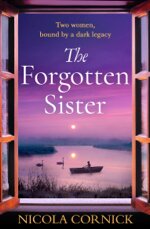 The Forgotten Sister:
One woman’s secret will shape another’s destiny…
1560: Amy Robsart is trapped in a loveless marriage to Robert Dudley, a member of the court of Queen Elizabeth I. Surrounded by enemies and with nowhere left to turn, Amy hatches a desperate scheme to escape – one with devastating consequences that will echo through the centuries…
Present Day: When Lizzie Kingdom is forced to withdraw from the public eye in a blaze of scandal, it seems her life is over. But she’s about to encounter a young man, Johnny Robsart, whose fate will interlace with hers in the most unexpected of ways. For Johnny is certain that Lizzie is linked to a terrible secret dating back to Tudor times. If Lizzie is brave enough to go in search of the truth, then what she discovers will change the course of their lives forever.
Available on Amazon.
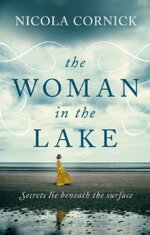 The Woman in the Lake:
London, 1765
Lady Isabella Gerard, a respectable member of Georgian society, orders her maid to take her new golden gown and destroy it, its shimmering beauty tainted by the actions of her brutal husband the night before.
Three months later, Lord Gerard stands at the shoreline of the lake, looking down at a woman wearing the golden gown. As the body slowly rolls over to reveal her face, it’s clear this was not his intended victim…
250 Years Later…
When a gown she stole from a historic home as a child is mysteriously returned to Fenella Brightwell, it begins to possess her in exactly the same way that it did as a girl. Soon the fragile new life Fen has created for herself away from her abusive ex-husband is threatened at its foundations by the gown’s power over her until she can’t tell what is real and what is imaginary.
As Fen uncovers more about the gown and Isabella’s story, she begins to see the parallels with her own life. When each piece of history is revealed, the gown—and its past—seems to possess her more and more, culminating in a dramatic revelation set to destroy her sanity.
Available on Amazon.