The Best Writing Career Decision I Ever Made
by Kathryn Quigley
I became a paid writer in 1989 shortly after graduating from Villanova University
with a degree in Communications.
During college, I was heavily involved in the campus newspaper and served as Entertainment Editor. While looking for a full-time job, another friend from the college paper told me about freelancing opportunities in suburban bureaus of the Philadelphia Inquirer.
This was a good time in daily journalism and newspapers were actually expanding. I started writing a few stories here and there for two bureaus of the Inquirer and got paid for it, anywhere from $55 to $80 per story.
How I Went from Reporting to Teaching at a University
I worked for nearly a year as a public relations assistant for a Philadelphia dance company. When I lost my job in a series of layoffs, I went back to freelancing for the Inquirer to pay the bills.
Turns out, a newsroom felt like “home” to me and I became a correspondent for the Bucks County bureau of the Inquirer for the next two years. It was not very much money ($450 per week) but it was steady and I honed my craft with some incredible editors.
Since my work at the Inquirer did not develop into full time, I set out for the South. I worked at daily newspapers in North Carolina and Florida for 10 more years.
While at the Palm Beach Post, a colleague hooked me up with an adjunct job teaching journalism one morning a week at Florida Atlantic University. Later that year, I turned teaching into a full-time job when I accepted a position in the journalism department at Rowan University.
Having Several “Niches” Provides for Better Opportunities
I have several “niches,” which is good because that provides for better opportunities. As a journalism professor, I specialize in Media Ethics and Feature Writing. I am also the faculty advisor of the university’s newspaper.
It is like teaching but because Rowan is a public university, the legal concept of “no prior restraint applies.” That means I am not allowed to make the students put anything specific in the newspaper or take anything out. They do not have to listen to me. But usually they do.
As a journalist and in graduate school, my research interest was Children & Families Journalism.
And as a freelance writer, most of what I do is either slice-of-life essays, or first-person articles about adoption, parenting and special needs children.
How My Master’s Degree Was My Ticket to a Full-Time Teaching Career
My most lucrative source of writing income is definitely from my full time job as a college professor.
The best career decision I ever made was to take a chance and apply for a fellowship in Children & Families Journalism at the University of Maryland. I was 32 years old and had been a full time journalist for years.
But I quit my job, moved to Maryland for 12 months and earned my master’s degree in journalism from a great school. Although the fellowship paid my tuition and provided a small stipend, I was still rather poor for a year.
That master’s degree was the ticket to a full-time teaching career later on. While many of my newspaper colleagues have been laid off, I was lucky enough to get tenure and am blessed with job security.
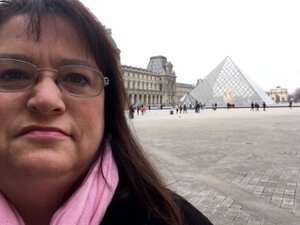
Kathryn at the Louvre.
Journalism Students Can Still Get Jobs Today
My Journalism Department colleagues and I constantly discuss the changing nature of our profession. We are upfront and honest with the students, too.
We do our best to prepare our students to work in a variety of jobs within the industry. They are all cross trained in writing, online web production, photojournalism and media ethics. They can also specialize in TV or radio broadcast, or in publication design.
As a result, they have gotten jobs everywhere from on-air correspondent at MSNBC, data journalist at the NJ Star Ledger and social media manager at the History Channel.
I have started including in my classes more discussion of job hunting, interviewing and how to deal with being laid off. No one discussed layoffs when I was in college and I was devastated when it happened to me — even though it had nothing to do with my skills or performance.
Lie to Yourself About Deadlines to Increase Productivity!
I write “To Do” reminders on my iPhone and keep track of my schedule that way, including what topics I plan to bring up in class.
When I am on deadline for a freelance article, I lie to myself about the deadline and set it two days early. I still finish it at the last minute, but I am actually early. That method helped me get through graduate school.
I also tend to write my freelance articles in my head before I put them into the computer — a mental first draft.
Staying Motivated
I read good writing, such as The New Yorker, Vanity Fair, New York Times and the Washington Post. I attend journalism, communications or writing conferences at least once a year. And when my students succeed, it just makes me ridiculously happy for them.
Advice for a Young Writer: Be Bold
Don’t hide your light under a bushel. No one is out there, seeking to uncover your hidden talent. You must be bold with your talent and your skills without depending on others to “discover” you.
Write for a local publication. Write for an online website. Write your own essays and put them on medium.com.
Write as much as you can, because you have to squeeze all the bad writing out of your keyboard before the good writing can flow. And read, read, read. Everything from magazines, to song lyrics to the Bible can be a writing guide.
– – –
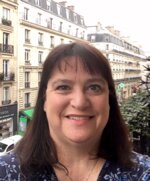 Kathryn Quigley is an associate professor of journalism at Rowan University in New Jersey and a freelance writer. She earned her B.A. in Communications from Villanova University and her M.A. in Journalism from the University of Maryland, College Park.
Kathryn was a daily newspaper reporter for 12 years. She was a correspondent at the Philadelphia Inquirer and a staff writer at: the Fayetteville Observer in NC and the Daytona Beach News-Journal, Orlando Sentinel and the Palm Beach Post in Florida.
Her research interests include media ethics and children & families journalism. She freelances for the Philadelphia Inquirer, Philly Metro, New Jersey Family and New Jersey Baby. She is a Philadelphia native and the mother of two boys.
For more information about Kathryn and her work, please connect with her on Twitter, or email her at kathrynsquigley at gmail dot com. Below are some of her published articles:
- Palm Beach Follies
- What I Wish I Knew Before Adopting
- Living With ADHD
- How Did I Get Here?
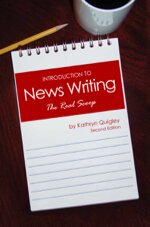 Introduction to News Writing: The Real Scoop: The field of journalism has changed dramatically over the past decade — the Middle East experienced the “Arab Spring” of reform, Twitter and Facebook have gained social media users at an explosive rate, and newspapers, magazines and TV news programs continue to change and restructure.
One thing remains the same: the need for compelling and concise news stories. Now, more than ever, journalists need to be able to get the stories right. And they need to write and report faster than ever.
Written in a spare, precise, and oftentimes humorous way, Introduction to News Writing: The Real Scoop provides knowledge and confidence to college journalism students and those just starting out in the field.
Introduction to News Writing: The Real Scoop:
- Is written by Kathryn Quigley — an educator, newspaper reporter, and freelance journalist.
- Provides detailed advice and tips on how to cover typical journalism assignments.
- Features in-depth interviews with top reporters and editors.
- Contains Ten Tips and tear-out assignment sheets for each chapter.
Available at Kendall Hunt Publishing.