
What to Do If You Want to be a Freelance Editor
by Rachel Small
When I stumbled upon the profession of book editing via a Google search in my fourth year of university, the proverbial light bulb went on above my head.
This was it. The career I’d been waiting for.
I’d finish my degree in English, take continuing-education classes in publishing, and start working at a prestigious publishing house.
The first two things happened. And I’m glad the third thing didn’t.
Why I Decided to Leave the Publishing House and Venture Into Freelance Editing
After only six months at a small publishing house, I realized that the 9 to 5 structure just didn’t suit me. I wanted the freedom to set my own schedule and choose the projects I worked on.
I decided to venture into freelance editing.
I “hung my shingle” by joining a local editing association and creating a profile on its website. This was helpful because I hadn’t yet set up my own website and knew how important it was to have an online presence. My first client contacted me through this site.
I also attended as many writing and editing events as I could (conferences, talks, wine and cheese nights, the list goes on). This early networking was hugely beneficial. I met so many wonderful people — writers, editors, marketers, publishers — who became colleagues and introduced me to people who would eventually become clients.
And I came to realize how important camaraderie is in a profession that can be quite isolating.
After I had a few projects under my belt and gained some confidence, I began asking satisfied clients for testimonials and referrals. This created fantastic momentum. I also took every opportunity to talk to people about what I did, without being pushy. Turns out, most people know someone who’s writing something!
Working with Genres I Genuinely Enjoy Makes the Editing Process More Pleasant
When I started my business, I made the conscious decision to take on almost any project that came my way, unless it was a genre with which I was unfamiliar. I didn’t want to pigeonhole myself and knew I needed to get a feel for what I really enjoyed and what I was best at.
As a reader, I’ve always enjoyed literary fiction and short stories, and I found myself gravitating toward these genres as an editor (and writer!) as well. When it comes to non-fiction, I enjoy reading inspirational material and travel literature, so I moved in this direction as an editor, too.
Working with genres I genuinely enjoy and feel confident editing makes the editing process more pleasant for both the writer and me. It also allows me to be an enthusiastic supporter of the work.
While I’m passionate about fiction and creative non-fiction, I also enjoy editing for corporations. I get to use a different set of skills — there’s much more focus on plain language and less on creative expression.
I Didn’t Feel I Had Anything Different to Offer
As I was developing my business, I kept coming across the same advice: Find out what sets you apart from others in your field and convey this to potential clients.
This frustrated me to no end because I didn’t feel I had anything different to offer. How could I possibly offer something unique when there were editors who had been in the business for over thirty years?
Marketing has never been my strong suit, and it’s still one of my least favourite aspects of running a business. But over the years, I started noticing a pattern. The clients who gave me glowing testimonials and kept coming back to me weren’t just happy with my work — they enjoyed working with me on a human level.
A couple of years ago, I told a mentor I’d had a breakthrough: “I am what sets me apart. This is what I have to offer that’s different from other editors.” She smiled knowingly.
It’s important to me to build relationships of loyalty and trust with my clients. The editing process can often take months, and it’s that much more enjoyable if the client and I don’t just respect each other but also like each other. Of course it’s important to be professional, but let your personality shine through where possible.
Running My Business Became Easier Once I Determined My Peak Productive Hours
Running my business became infinitely easier once I’d determined my peak productive hours — and then respected them. A business coach once told me that every person is at their peak for four hours a day, and that we need to guard these hours “like a momma bear guards her cubs.”
I have friends and colleagues who love to dive into their toughest work in the evening, but I’m an early bird. My most productive hours are between 7:00 a.m. and 11:00 a.m., so I’ve adjusted my schedule accordingly.
I go to bed at a decent hour and get up early enough to allow myself time to ease into my day (i.e., drink coffee) before I sit down at the computer. I then put my phone on airplane mode and tackle the day’s most important project.
I try to delay checking email until I’ve gotten a good chunk of work done, unless I’m expecting a time-sensitive project to come in. I learned the hard way that it’s far too easy to let my productive hours get derailed by emails that don’t require my immediate attention.
It’s all about scheduling your day in a way that works for you.
Advice for Someone Wanting to be a Freelance Editor: Put Yourself Out There
The decision to start my editing business was the best one I ever made.
Make the call, send the email, go to the event — put yourself out there. I’m a shy person, and I’m also an introvert, but the connections I made with people in the publishing world in those early days made all the difference. Doing so would often push me well out of my comfort zone, but afterward, I was always glad I’d done it.
Oh, and one thing I wish I’d known when I started? You need to charge what you’re worth. When you’re building a business, it’s easy to fall into the trap of taking every client that comes your way, regardless of pay. Yes, experience is a great thing, and you can’t expect to make the highest rate out there immediately, but there are industry ranges — learn them and make sure you’re falling within them.
* * *
 Rachel Small is a book editor based in Toronto, Canada. An Advanced Professional Member of the Chartered Institute of Editing and Proofreading, she specializes in literary fiction, short stories, memoirs, self-help/inspirational books, and travel literature.
To get in touch, you can visit her website or her professional profiles: CIEP and Reedsy. You can also connect with her on LinkedIn and Twitter.
Rachel also recently published a collection of short stories with co-author Carrie Mumford: None of These Are True.
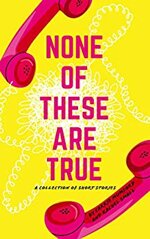 None of These Are True: With these ten short stories, Rachel Small and Carrie Mumford have captured the essence of late-night secret-sharing.
The stories will make you laugh, might make you cry, and are sure to stick with you long after you’ve finished reading them. Although each story stands alone, the collection has a powerful unity.
None of These Are True is a raw collection of stories about love, uncertainty, and struggle that feels like a conversation between friends.
Available at these bookstores.