
Why Writers Should be Open to Alternate Paths
by D. R. McElroy
Growing up, I read a ton of books, as I think most of us future writers do.
But what got me interested in writing was actually television! I was a child of the ‘60s and TV was still relatively new. I often say that “television raised me” because my folks (who both worked full-time) would set us down in front of the TV and go to work, secure in the knowledge that we wouldn’t move for hours.
By the time I started school, the hour-long dramas were king of the airwaves: Bonanza, Policewoman, Marcus Welby M.D., The Six Million Dollar Man…I loved them all. I had vivid dreams about partnering with the characters (who were “real” to me) in their adventures.
At age 11, I started writing fan fiction (before there really was such a thing). I wrote stories for EMERGENCY!, Starsky & Hutch, The Bionic Woman, and Charlie’s Angels. The latter two were pivotal shows for me, with leading female characters in action roles—a rarity then, though not a lot has changed nowadays.
I was still writing when I entered high school. I took a creative writing class and the teacher encouraged me to enter my work for publication in magazines. My first paying piece was published in a Dungeons & Dragons fanzine when I was 17.
In My Early Years, I Made Most of My Money as an Editor and Proofreader
For years, I’ve been asked about my “niche” and I’ve never been able to come up with a satisfactory answer!
The writing that is closest to my heart concerns environmental topics such as conservation, reclamation, sustainability, wildlife habitat management, etc. I earned a Bachelors degree in Horticulture and a Masters degree in Natural Resource Management in college.
In my early years as a professional writer, however, I made most of my money as an editor and proofreader. I have a keen eye for grammar errors and an amazing ability to recognize patterns, which lets me pick out typos as if they glow in the dark!
I’m also skilled at cutting out the fat and leaving the meat of a story.
Print Publication Used to be the Main Gig, but Now We Have So Many Opportunities as Writers
I’m relatively new at the marketing game. Most of my editing work came from word of mouth; early on, I made connections with a couple of key editors in the publishing business (back when everything was done with letters and envelopes!) who would funnel to me as much work as I could handle. For 30 years, I had a separate full-time job as a bookseller, so my editing work was a side-gig.
Now that I’ve retired from retail, I’m working to expand my editing business into a full-time writing and editing service. I began by establishing myself on LinkedIn a few years ago; that website has declined in popularity somewhat now, but I still get work from it. I have a large vetted network of connections there and we sometimes trade jobs and recommendations to publishers.
I’m constantly seeking new outlets for my work. It used to be print publication was the main gig, but now we have so many opportunities: from copywriting, content creation, and webzines, to video scripting, voice over work, and much more. It’s an exciting time to be a writer!
As to how I make myself “attractive” to clients, I established from the very beginning a reputation for professionalism and attention to detail. I always turn in the cleanest, clearest copy possible, and I make absolutely sure to hit my deadlines. That’s incredibly important, especially in today’s highly-competitive job market.
Also, BE FLEXIBLE! The more skills you have and the more styles of writing you are open to, the more work you will naturally get. I have more opportunities than I can take advantage of right now because I am willing to consider almost any type of writing a client asks for (though I won’t write erotica).
My Most Lucrative Jobs: Writing Books
My most lucrative jobs (and my favorite assignments) are book requests. I have a publisher that assigns me topics for books they want written; they give me a word count range—say 60- to 80K—and a rough outline of what should be covered, then let me decide the specifics regarding style, content, organization, etc. I love having so much control, yet also having guidelines. I find that makes it much faster to write the book. I’ve written four books for them this way.
I made a list of topics that I am expert in (like environment and horticulture) and also topics that I have particular interest in (animals, biology, mental health, etc.). The expert list makes it easy for them to choose me when those topics are requested for a book; the interest list shows them that I have abilities beyond what they might ordinarily consider me for. Three of the books I wrote for them came from my interest list and only one from my expert list.
What’s It Like Writing Books for Hire?
I get a lot of questions about my book writing assignments. I write nonfiction reference books mostly, which is a whole different animal from novels. In my case, the publishing company that my editor works for contracts with authors to write books on specific titles the company wants in their catalog.
My last assignment, for example, was a book about superstitions and folklore from around the world. My editor pitched the idea to me, and I agreed to write the book. Most authors experience the reverse scenario.
Once an agreement is reached, my editor sends a contract that details the requirements that the publisher wants in the book: typically a word count range, index and/or table of contents, topics for inclusion (like myths from X number of countries, for example), and completion dates. In most cases, I am credited as the author, though occasionally I am contracted as a ghostwriter and may not receive a byline.
The publisher pays me a flat fee for the book; I receive no royalties from future sales. But this also means that I get the money upfront and don’t have to worry about things like marketing, sales numbers, or selling through the advance.
Writing Faster Means More Money Per Hour
The flat fee means that I have to make the most of my time in completing the assignment. Currently, my wage works out to about $24 per hour, which includes the time I spend researching my subjects and not actually at the keyboard typing. I figure I write about 200 per hour (with research time), which I don’t think is particularly fast.
If I were writing a novel, I expect that my output would be two or three times that number. Still, the more books I write, I find that I discover ways of cutting down the time spent researching, such as having a list of go-to resources such as Wikipedia (which of course must be vetted) and a number of scientific journals (I particularly like Nature and JAMA).
I’m also working to improve my typing speed, which is currently about 75 wpm; I know plenty of people who can type twice that speed!
A set schedule helps with time management as well; because I’m a night owl, I usually sit down at the computer by about noon, then write/research nonstop for five hours or so. I do this five days a week, giving myself a couple of days off to refresh my brain from the intense concentration each week. The schedule makes it easy for me to know how long it’s going to take me to write a certain book, and then negotiate the time needed so that my head doesn’t explode trying to meet too short a deadline.
How I Got My First Book-Writing Assignment
This arrangement is ideal for me, and people often wonder how I got into it. The answer is, it came to me via my side-gig, which was editing.
I had made a number of judicious connections on LinkedIn and developed a good reputation as an editor. One of those connections contacted me about editing a piece for her. Circumstances led to me not responding to her query quickly enough, and she wound up giving the piece to another freelancer.
I wanted this woman as a client, so I took the initiative to edit the piece anyway and send it to her free of charge with just a 24-hour turnaround. She was so impressed with my work and the fact that I went above and beyond to be of service to her, that within two weeks she came back to me with the offer to co-write a book on watercolor art.
This book was subsequently published as Celestial Watercolor, and I got my first byline as an author without pitching or querying!
When aspiring writers ask me what they should do to be successful, I always say:
“Over-deliver on your promises, and make every piece of work you submit the absolute best it can be. You never know who’s going to see it and what opportunities will be presented as a result.”
What I Learned While Selling Books
[After years working as a bookseller], I learned that quality matters enormously when consumers buy books. This is the major reason self-published authors have so much trouble selling their books. If the cover looks amateurish or the backcover blurb doesn’t excite the way it should, people won’t buy the book.If you’re going to self-publish, then spend as much money as you possibly can to make your book look and feel like a book from one of the big Five. Otherwise, stick to publishing ebooks. I have handled tens of thousands of books in my time, and I can tell immediately when something has been professionally published and when it hasn’t.
It’s true that mainstream publishers put a lot of money into advertising and promoting their books—though not nearly as much as they used to. Today, much of the marketing and selling is left to the authors—and most of us are ill-equipped to handle those jobs. Gone are the days of huge advances, author book tours, and hermit-like lifestyles. Nowadays, authors must learn how to promote their work in various ways, including social media, video, readings, and frequently school appearances (if you write for young people).
We also have to get out there and make our names and our faces known. Platform matters to publishers when they’re deciding whether or not to publish your work, so grow your followers as much as you can.
More importantly, engage with them: become someone they know, like, and want to follow. Having a list of 50K names does little good if most of them have no idea who you are as a person. Without engagement, you’re just another faceless nobody trying to push a product on them. You’ll be forgotten when the next thing comes along.
Readers are incredibly loyal to the authors they love; they’ll usually buy whatever your next book is, no matter the topic or what the reviews say. Reward that loyalty with engagement, and never take your fans for granted!
Why I Don’t Use Grammarly
Having a good editing program is essential. I use ProWriter, which I find is much more accurate than Grammarly. Grammarly is free (though it has paid levels that I’ve not used), so I understand why it has errors. ProWriter is fairly cheap (about $70 per year), and is very flexible and detailed. It produces a number of reports that allow you to examine your work in detail (such as tone, reading level, vocabulary content, adverb use, etc.), making it easy to tailor your output to your client’s needs.
Eventually, I’d like to get Scrivener, which has its best application for writing fiction. Learning to use it, by most accounts, takes time, but it’s reported to be extremely helpful for plotting and creating characters. Right now, most of my work is nonfiction, but I want to write a novel someday.
My writing “process” is fairly stripped-down: I brew a whole pot of coffee, sit on the sofa in front of my big picture window with my laptop, and write into the wee small hours of the night (I’m a natural night owl). I like the absolute quiet in the house and no sounds of traffic outside; I can’t write with music or background noise.
Advice for a Young Writer: Be Open to Alternative Paths
First, if you want to be a professional writer then begin by writing as much as you can—every day, if possible. After 40 years, I still try to write something every day, even when I’m not on assignment.
Second, be open to some of the alternative paths to professional writing. Sometimes, people get it into their heads that all they want to write is novels—specifically sci-fi novels—specifically robot-cowboy sci-fi novels (for example). Niching down is all well and good, once you’ve developed your chops as a professional writer. But in the beginning, you should try all different kinds of writing, and take as many paying jobs as you can get. You’ll develop a reputation as a professional, learn the ropes of the business, and explore the many ways to make money as writer that you might not have known about.
Third, I can’t stress enough the importance of being professional: don’t be a jerk or a high-strung artiste. There’s simply too much competition in the writing field for editors and publishers to be willing to put up with your crap. You’re not such a genius that you can’t be replaced by someone else who’s easier to work with.
* * *
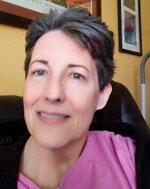 D.R. McElroy has been a professional writer and editor for over 40 years.
She currently makes her living writing nonfiction reference books for a small publisher, with four books published so far.
Ms McElroy lives in Michigan with her long-suffering husband and her beautiful but not-very-bright cat.
For more information on her work, please see her website and her articles on Medium, or connect with her on LinkedIn and Twitter.
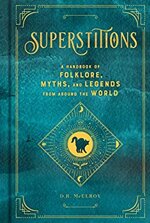 Superstitions: A Handbook of Folklore, Myths, and Legends from around the World (Mystical Handbook): In this definitive reference, you’ll learn the fascinating and often bizarre histories of a comprehensive range of superstitions from around the world. For example, the belief that one will have seven years’ bad luck if you break a mirror is said to come from the Romans, who were the first to create glass mirrors. And in Japanese culture, cutting your nails at night is thought to lead to a quick death because the two phrases sound similar.
You’ll also find out why some superstitions vary from culture to culture. For instance, the “unlucky” number 13 is considered a bad omen in some countries, like the US, and “lucky” in other countries, like Italy—where the number 17 is considered unlucky. The information is organized by country, so you can easily investigate the popular superstitions linked to your own or other specific ethnic heritage or cultural identity.
Satisfy your burning curiosity with this complete guide to superstitions, folklore, and myths.
Available on Amazon.
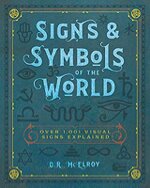 Signs and Symbols of the World: What in the world does Ω mean? And what about its meaning might have led my coffee date to tattoo it on his entire forearm? Where did the symbol ∞ originate, and what was its first meaning? How did the ampersand symbol & come about and how was it applied daily in book publishing? And what is the full story behind that staring eye on top of the pyramid on our American dollar bill? This comprehensive guide to signs and symbols explains.
Find within:
• More than 1,000 illustrations
• An extensive collection of written and cultural symbols, including animals, instruments, stones, shapes, numbers, colors, plants, food, parts of the body, religious and astrological symbols, emojis, and gestures
• Historical facts culled from a wide variety of sources
Learn all about the signs and symbols that surround us and their part in our rich world history. Available on Amazon.